

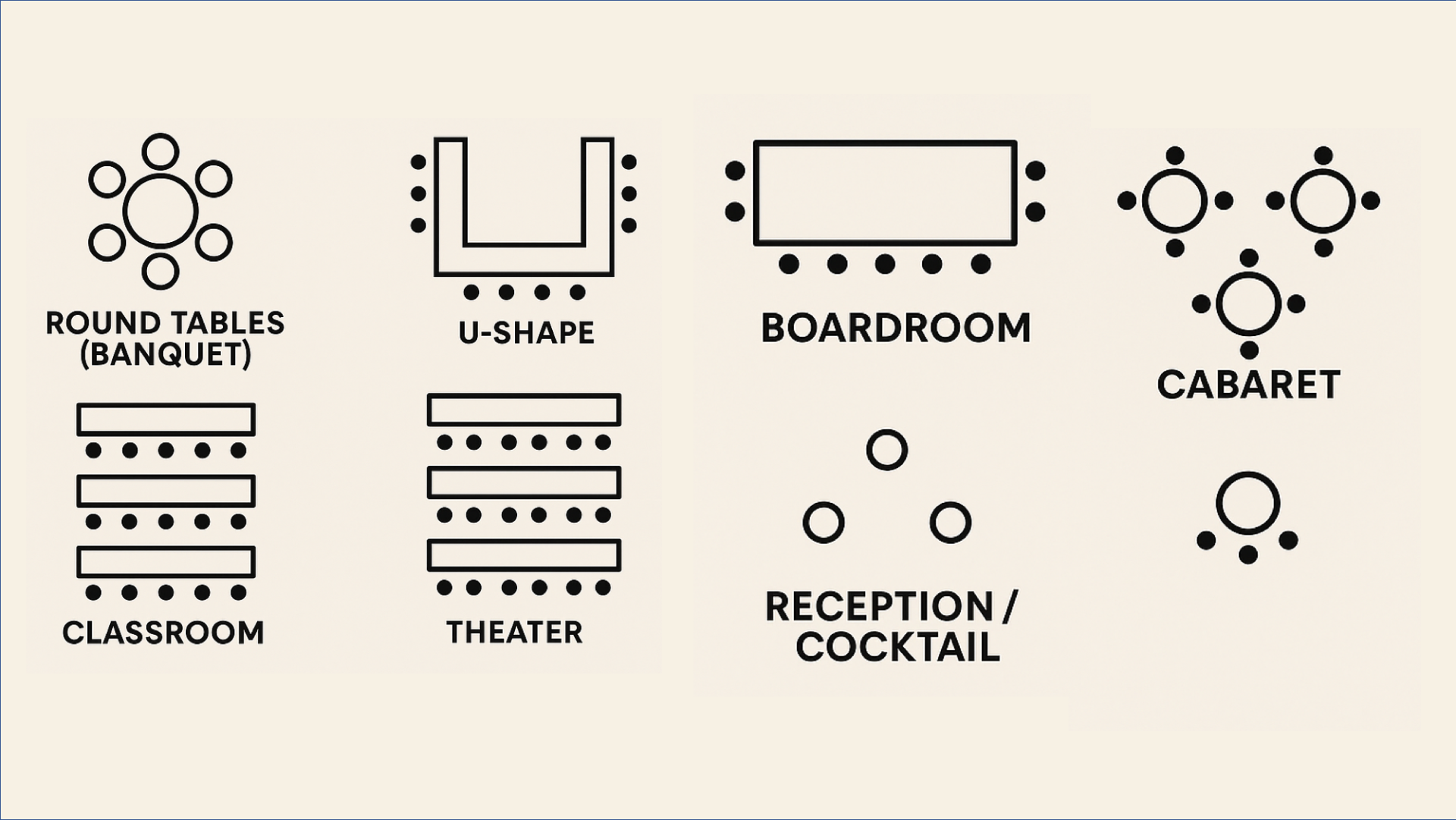
The way a room is arranged can have as much impact on a meeting or event as the agenda itself. Seating arrangements influence how people interact, share ideas, and stay engaged. Choosing the right setup depends on your goals—whether you want participants to collaborate, focus, or simply absorb information.
Here’s a guide to some of the most common room setups and when to use them.
1. Round Tables (Banquet Style)
Best for: Networking, group discussions, meals, collaborative workshops.
Round tables encourage conversation and equality because everyone has a clear line of sight to one another. They’re perfect when the goal is to foster relationships, brainstorming, or small group problem-solving. This setup is also ideal for events that include food service since tables double as dining space.
Watch out for: Round tables make it harder to focus attention on a speaker or screen unless additional staging and AV support are provided.
2. U-Shape
Best for: Training sessions, interactive presentations, and meetings with a central facilitator.
In a U-shape, participants face inward with open space in the middle. This creates strong interaction between the facilitator and the group while still allowing everyone to see each other. It’s an excellent setup for workshops, team-building, or discussions where the leader needs to move into the center to demonstrate.
Watch out for: U-shape works best for groups under 30. Larger groups may require microphones and more space, reducing intimacy.
3. Classroom Seating
Best for: Lectures, note-taking, and long sessions with presentations.
Classroom style features rows of tables and chairs facing the front, giving participants space to write or use laptops. It’s ideal when the primary purpose is information delivery, such as training programs, conferences, or seminars.
Watch out for: This arrangement limits interaction among attendees. Add Q&A or breakout sessions to keep engagement high.
4. Theater Style
Best for: Keynotes, large audiences, and presentations where minimal interaction is required.
In theater style, chairs are set up in rows facing the front, maximizing capacity. This layout focuses attention on the speaker or stage and works well for speeches, ceremonies, or product launches.
Watch out for: Without tables, it’s not suited for long sessions where participants need to write or work. Provide breaks to keep energy up.
5. Boardroom / Conference Table
Best for: Executive meetings, strategy sessions, and small groups where discussion is key.
A single table creates a sense of equality and encourages direct conversation. Everyone has a “seat at the table,” which supports decision-making, brainstorming, or negotiations.
Watch out for: This setup doesn’t scale well. Once the group grows beyond 20 people, it becomes hard to manage.
6. Cabaret Style
Best for: Collaborative workshops, training, or events that blend learning and networking.
Cabaret style uses small round tables with one side left open to face the speaker. It combines the benefits of round tables (interaction) with better sight lines to the front. It’s commonly used at leadership conferences or professional development events.
Watch out for: It requires more floor space than classroom seating, so room capacity may be lower.
7. Reception / Cocktail Style
Best for: Networking events, mixers, social hours.
High-top tables or open space without chairs encourage mingling and movement. This is the go-to for receptions, launches, and informal gatherings where the goal is connection rather than content delivery.
Watch out for: This format doesn’t work for presentations or lengthy agendas. Keep it short and social.
Final Thoughts
There’s no one-size-fits-all approach to room design. The right setup depends on what you want participants to do: listen, discuss, collaborate, or connect. As you plan your next meeting or event, start with your goal and then match the room arrangement to support it. A thoughtful setup not only enhances engagement but also helps achieve the results you’re aiming for.